|
It has been far too long since we have updated this blog. While we still own and operate Unwritten Timeline the world has changed. Government lockdowns came and went and during that time we started working with Antares Catamarans. There may be further stories ahead for Unwritten Timeline but for now she quietly floats in her new slip at Marine Craft. If you would like to follow along, you are looking for your next boat to purchase, looking for parts or want to have us help you with your upgrades be sure to check us out at our new location at 300 Old Lupton Road in Merritt, NC 28556. You can check out our new websites at Marine Craft, Timeless Yacht Sales and Services, or Marine Craft Supply. We look forward to seeing everyone there.
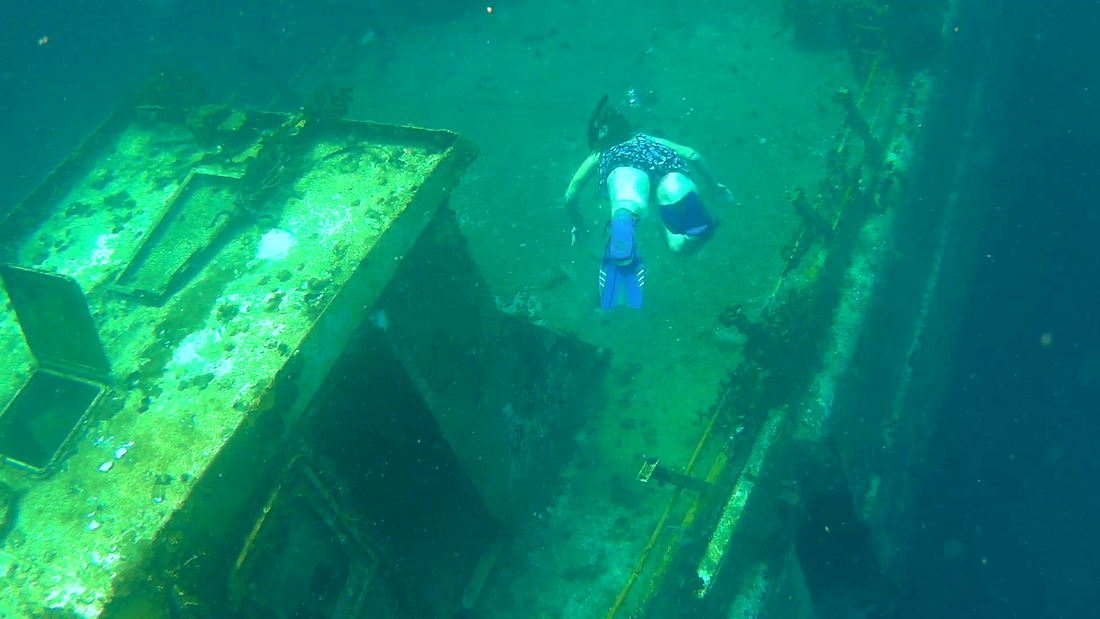
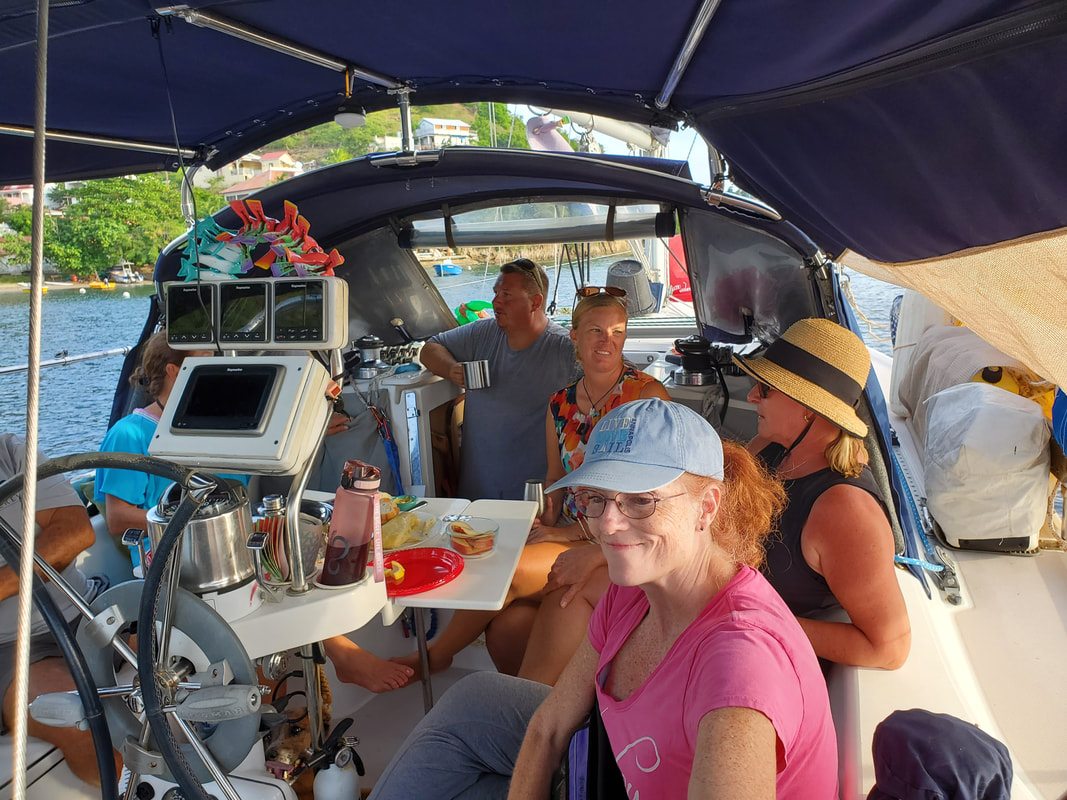
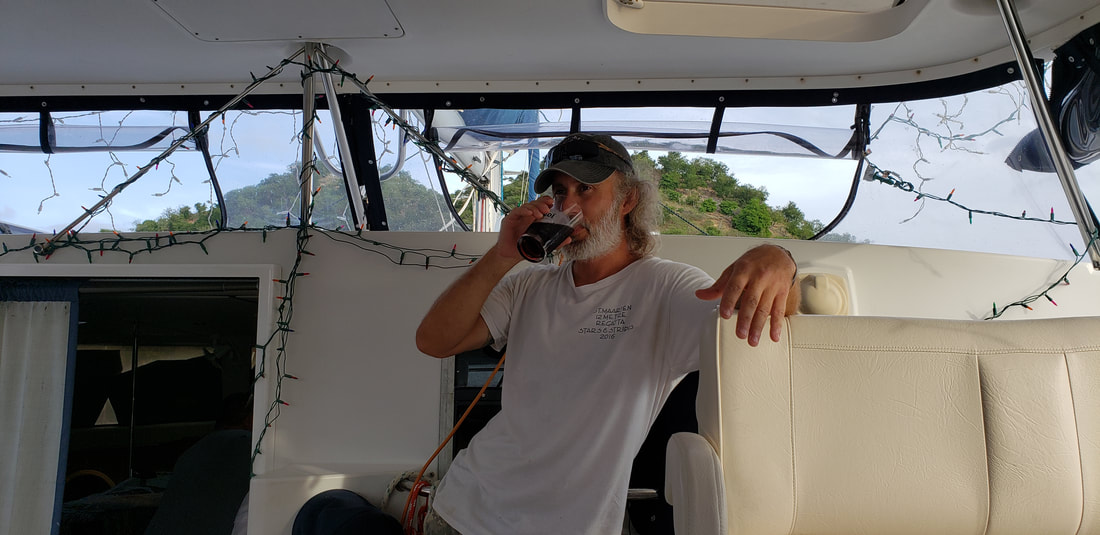
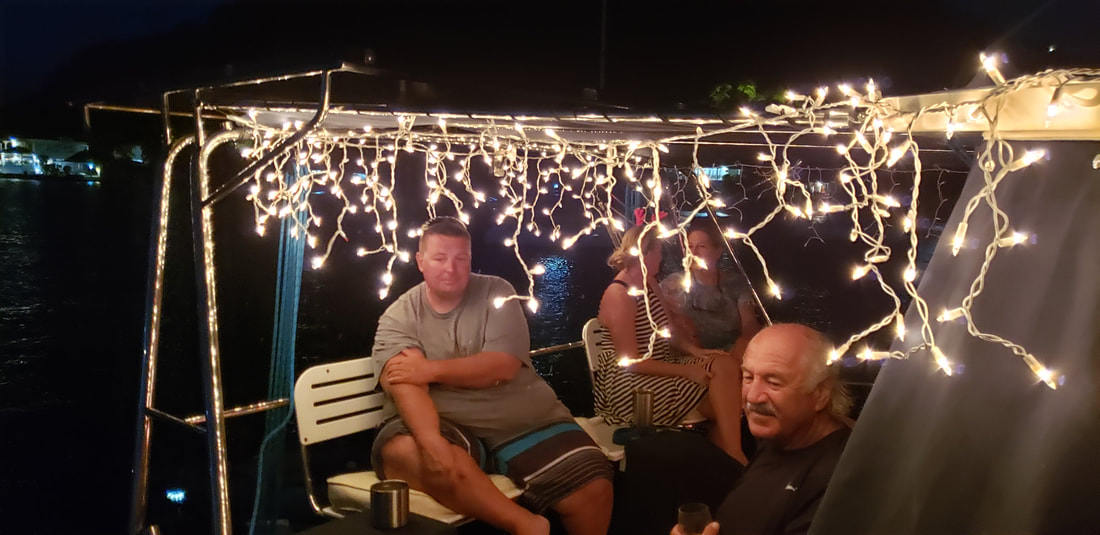
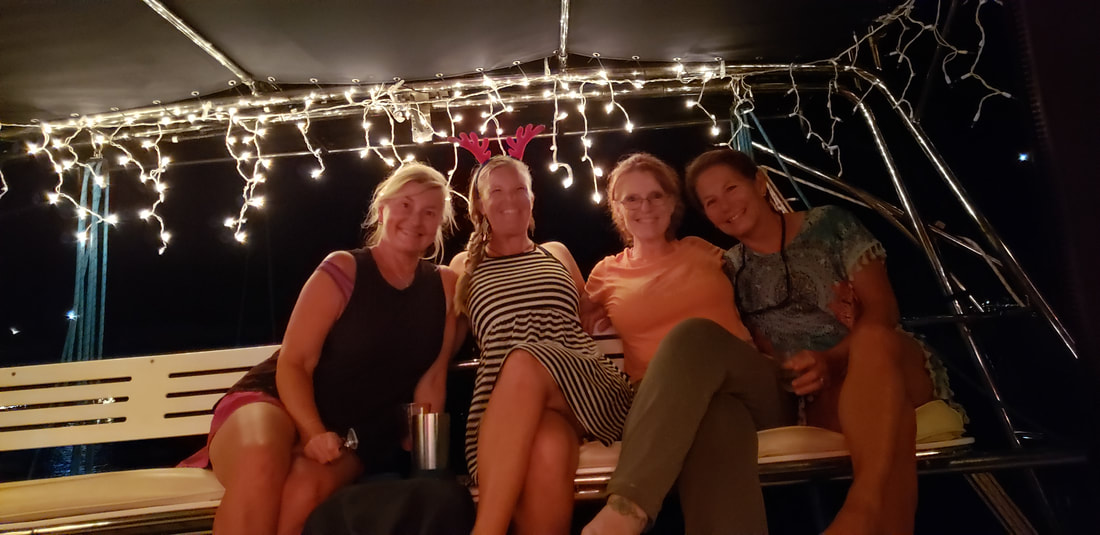
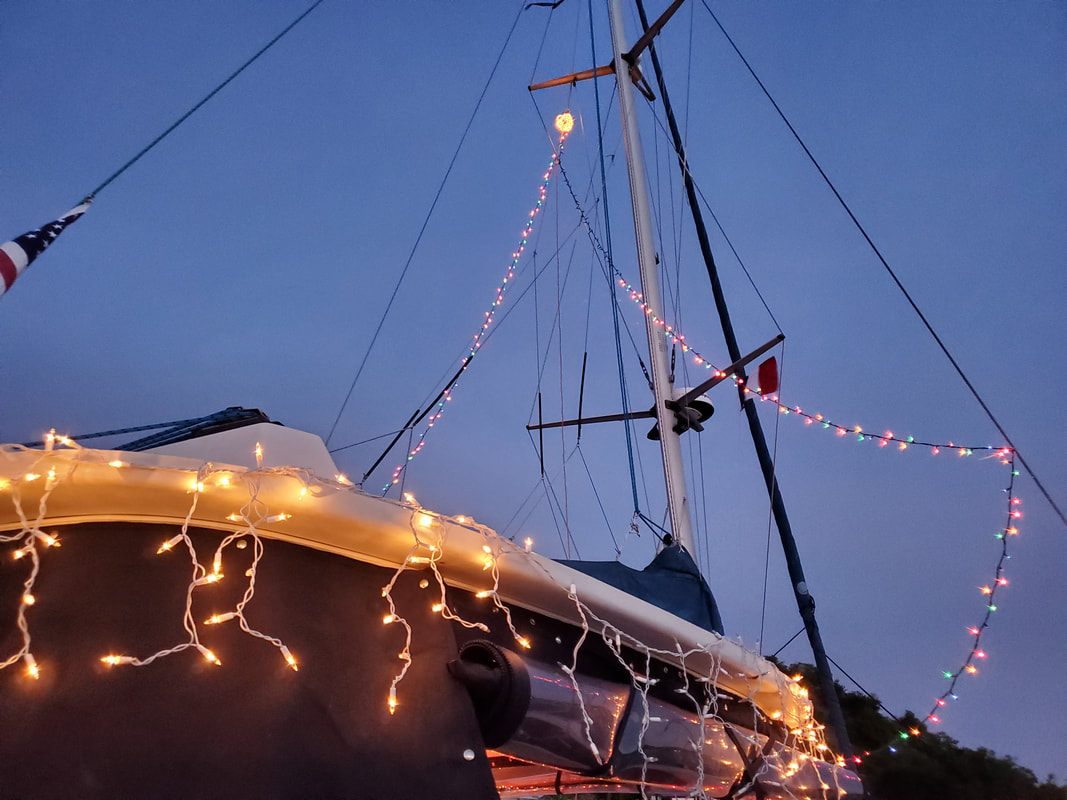
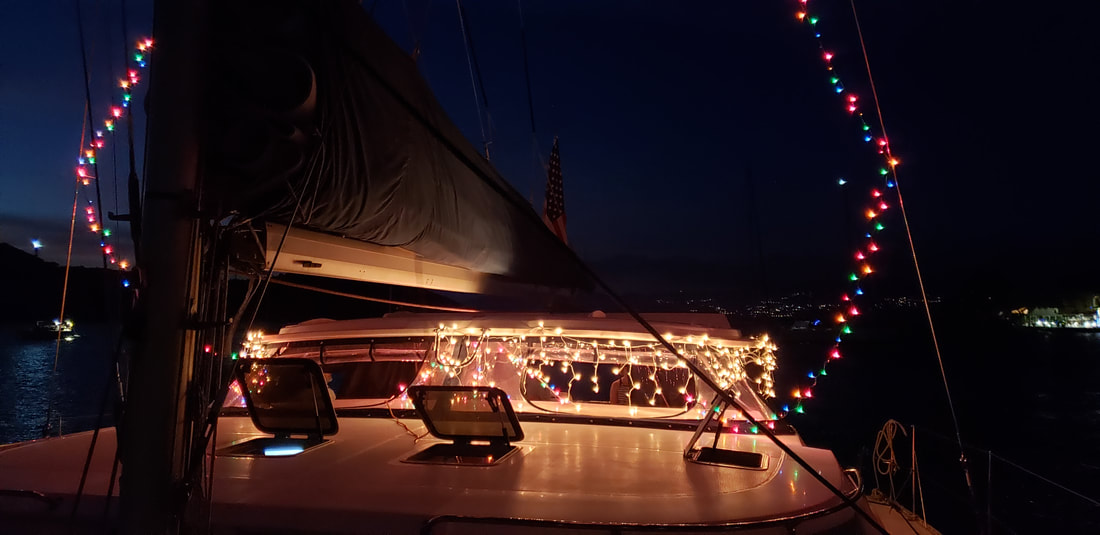
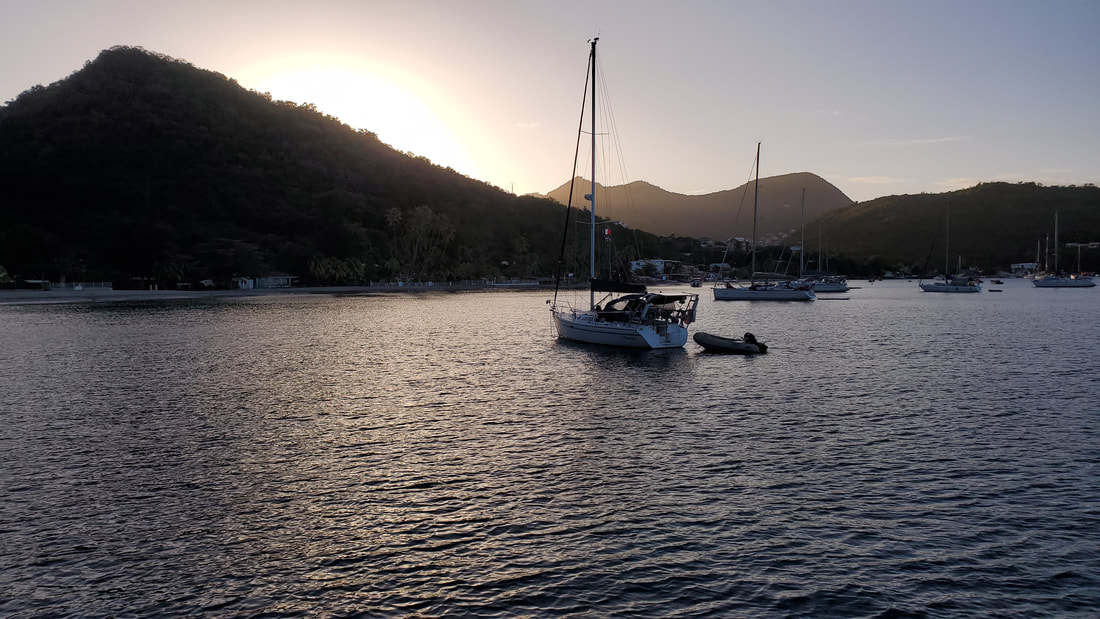
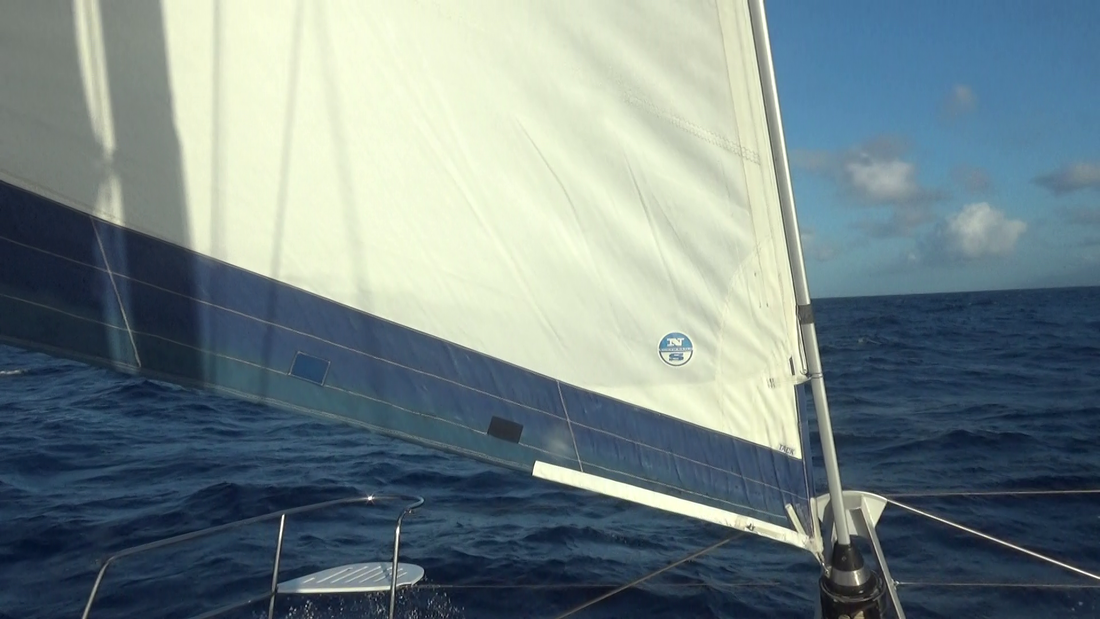
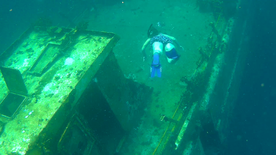
Lynndy Shipwreck Saint Pierre would be our last stop in Martinique. We thoroughly enjoyed our time there although it was a little short. We were able to link up with our friends aboard S/V Smitty and we met some new friends aboard S/V Sea Ya!. We will always remember our time there and can’t wait to stop back by the DePaz Rum distillery for another taste test when we’re sailing by there again. We were all looking forward to spending Christmas and New Year’s Eve in Les Saints, Guadaloupe so that didn’t leave much time to visit Dominica. We did take a few hours stop in Portsmouth to rest for the night so we could break up the trip into two day sails instead of an overnight to Les Saints from Saint Pierre. We also took the chance to fill up on water since our watermaker was still not working. They have a mooring with a potable water hose so you can tie right up and take on water. It beats tying to a busy dock just to grab some water. The next day we released our mooring lines and raised the sails, both of them. Our genoa was repaired and helping to drive us the last few miles into Les Saints, Guadaloupe. We rounded Pointe Boisjoli to see Fort Napoleon sitting atop a high hill overlooking all the island of Les Saints. We took up a mooring ball in the Le Bourg anchorage. This mooring field is managed by Les Saints Management (LSM). Although there is a not insignificant charge for the mooring use, we were glad to be here. We were even luckier with our specific mooring ball. We tied up about 100 feet away from the wreck of the Lynndy. The Lynndy is a wrecked passenger vessel that was sunk during a hurricane. It is now marked with two yellow crossed buoys. The wreck sits about 10 meters below the surface and can be reached with snorkel gear. It was awesome to be able to jump right off the back of our home and snorkel a shipwreck. Once we were settled we hung some Christmas lights up to celebrate the season. We spent Christmas Eve aboard S/V Smitty with the crews of S/V See Ya! and S/V Everlong. Stacey put together some great food, we all had plenty of drinks, and lots of laughs. This was our first holiday season living aboard. It is amazing to be in a tropical paradise for Christmas Eve surrounded by good friends, beautiful sites, and 360 degree waterfront views. The next day was Christmas aboard Unwritten Timeline. All four crews came together again to celebrate the holiday. Every crew brought over fantastic foods, and loads of laughter. Between all the crews we managed to put together a traditional Christmas dinner with all the sides. The party ran well into the night. Everyone was dancing and having a great time. We even had a couple party crashers show up for a bit to take part in the fun. Late that night, or early the next morning depending on your point of view, the party broke up. Our guests took their tenders back to their boats and Lisa and I picked up a little bit and went to sleep. The next few days we would get in some great hikes, our first official beach bonfire and get ready for new destinations. We departed Grande Anse as the first rays of sunshine were breaking over the lush tropical hilltops surrounding the bay. The winds hadn’t picked up yet as we motored past S/V Smitty enjoying their morning coffee. As we made our way out of the lee of the hills the wind filled in ever so slightly. We raised the main and turned North to Anse Turin. We would have liked to have the Genoa out as well, but it had ripped on our passage to Martinique.
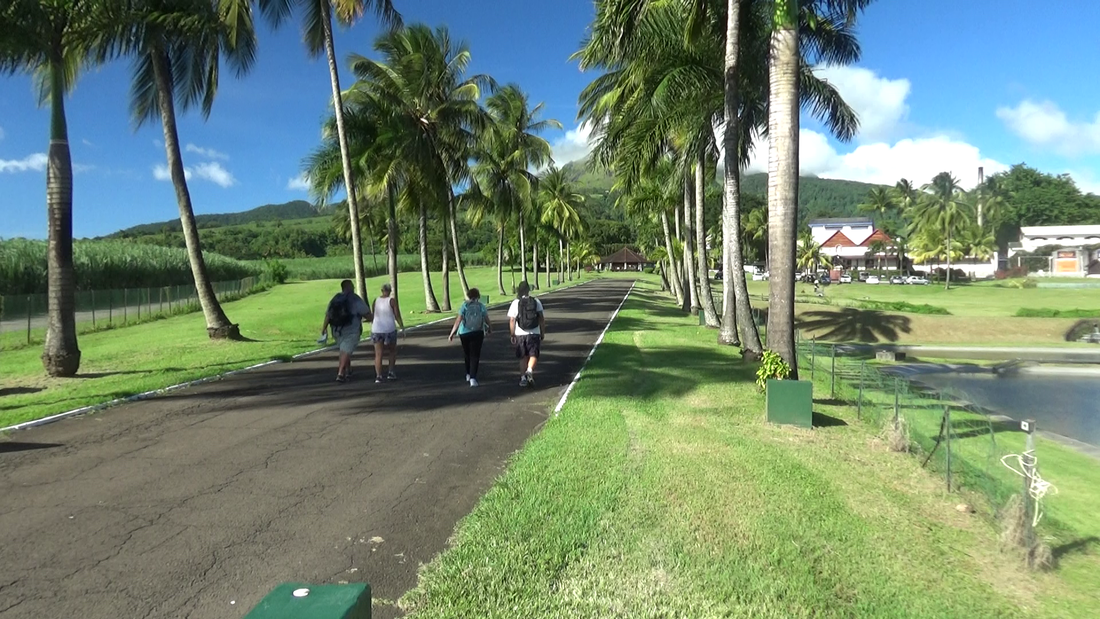
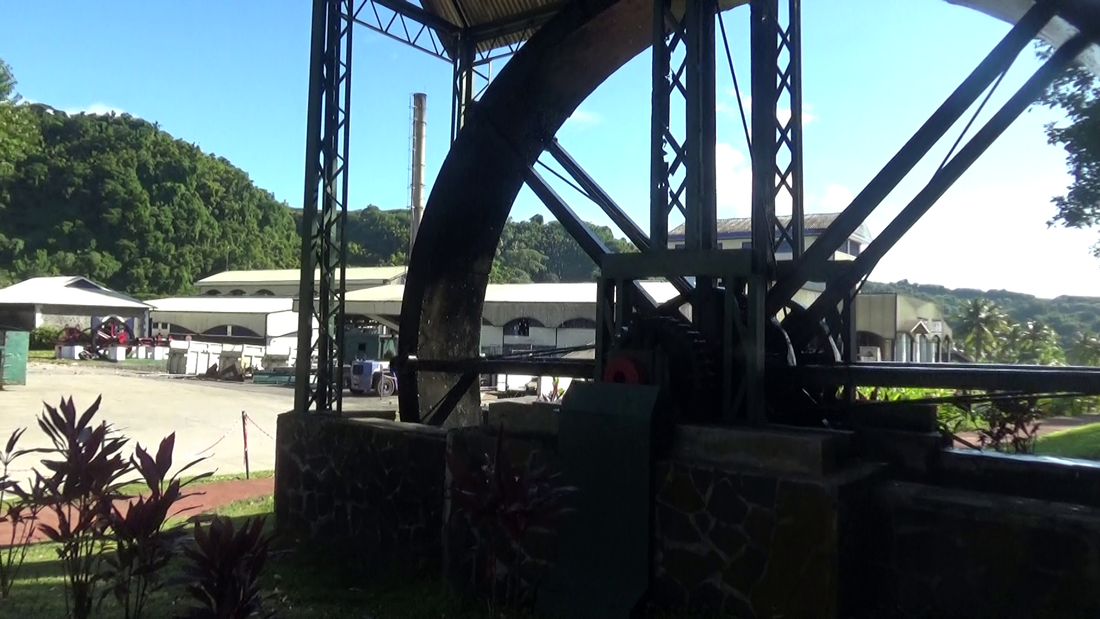
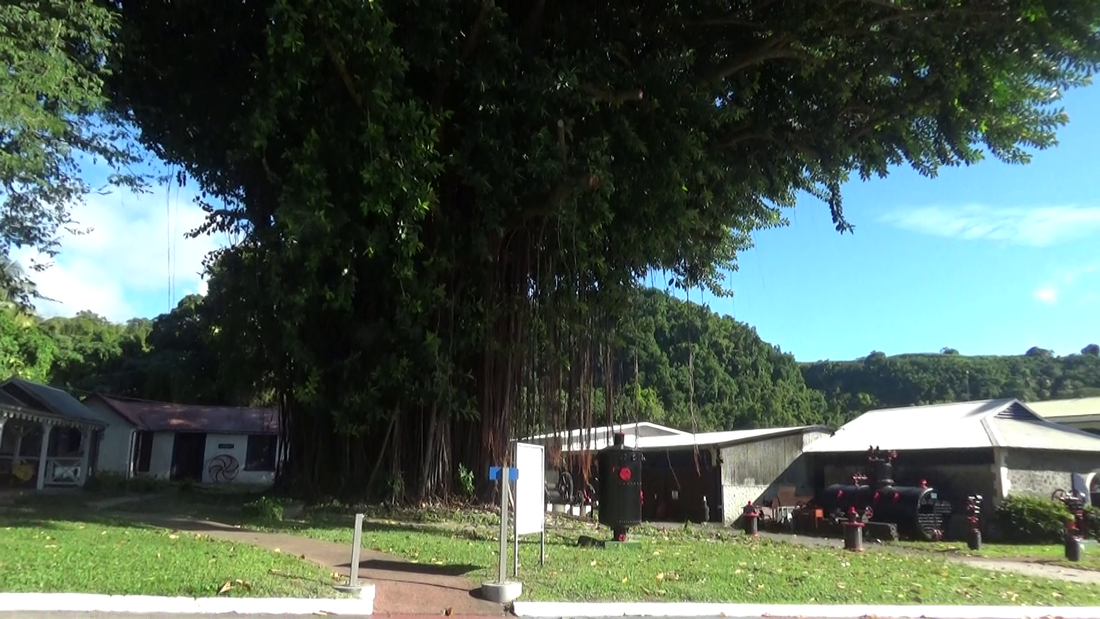
The anchorage at Saint Pierre was fairly crowded and it took us a few minutes to find a good spot to set our anchor. Arriving to a new anchorage is always a little time consuming. You have to find the best spot that is a good balance between being close to the tender dock so you can easily get to shore, but not so close that you and 30 of your closest friends all choose the same spot. We were just getting set when our friends from S/V Smitty and S/V Sea Ya! were arriving. Once everyone was settled we took a short walk through Saint Pierre for a drink and bite to eat. Saint Pierre was founded in 1635 and is a beautiful seaside city that has been designated a “City of Art and History”. Like most islands in the Caribbean, Martinique was formed from volcanic action. In 1902 the city of Saint Pierre was totally destroyed by the eruption of Mount Pelee. Only two people survived the eruption. If you have ever heard the story of the lone prisoner that survived a volcano, that is this story. Louis-Auguste Cyparis was the lucky one that survived the total destruction of the city. That is an interesting story all on its own. The next morning Lisa and I pulled the genoa down. We were finally ready to tackle the rips we made leaving the USVI. We moved the Sailrite LSZ-1 onto the bow and started stitching the UV cover. The UV cover protects the sail from sunlight when it is furled. The actual sail material isn’t very resistive to UV light so another fabric, like Sunbrella, is usually affixed to the last 12-18 inches of a sail. The seams failed and started flapping in the wind. Since the sail was already down we also took the time to patch up a couple places that were getting a little chaffe. A few hours later we were making the walk up to the De Paz Rum distillery. De Paz is just over three kilometers from the tender dock, but it is uphill the entire way. Luckily we were going up before the sun started really beating down on us. The Distillery sits at the foot of Mounte Pelee. DePaz produces an agricole rum from crushing fresh sugar cane. After the eruption of 1902 the grounds were rebuilt in 1917 and the distillery has been making tasty rum ever since. Visitors can do a self guided tour to see old watermills that still function. The red walking path takes you through some of the previously used buildings like the turbine room. The tour ends in the gift shop where you are offered free tastings of their delicious rum concoctions. The rum really is reasonably priced here as well. As we traveled to other places after this visit I took note of the prices around the Caribbean. I suggest stocking up here on whichever rum you enjoy. You’ll be glad you did. Be sure to check back next time when we take a quick stop in Dominica before heading off to Les Saints. If you’ve been following our journey you know we like to have a hearty hot breakfast every time we land in a new country. Martinique was no exception. We made up some Cincinnati Goetta, French Toast, for being in a French territory, and some eggs. We even got to bring some of our Cincinnati favorites to Jessie and Stacy from S/V Smitty. We were finally able to meet up in the Caribbean.
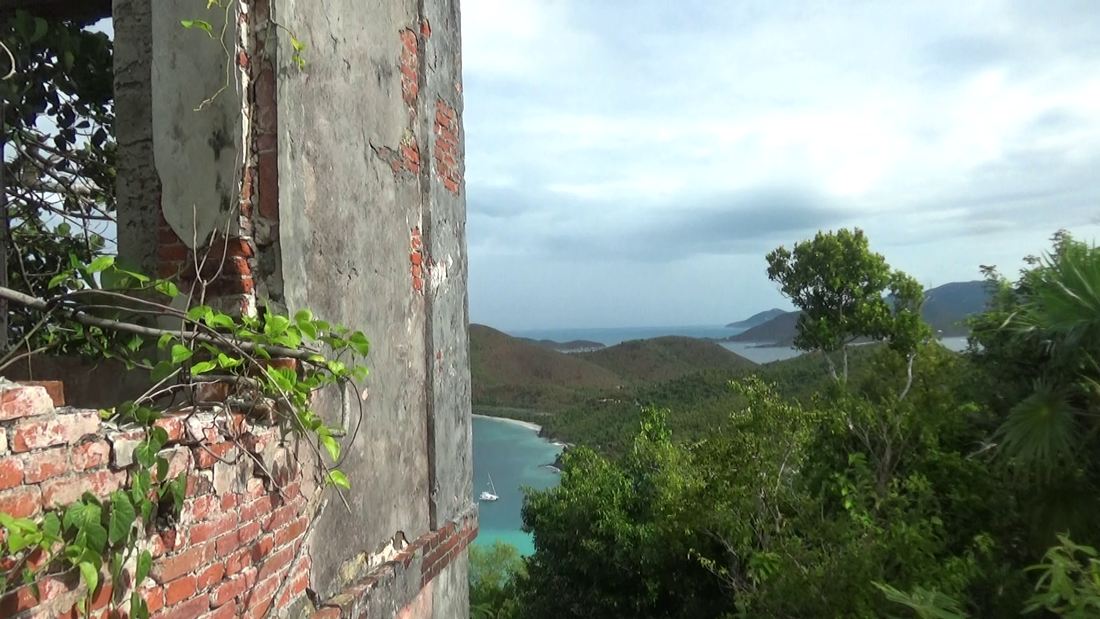
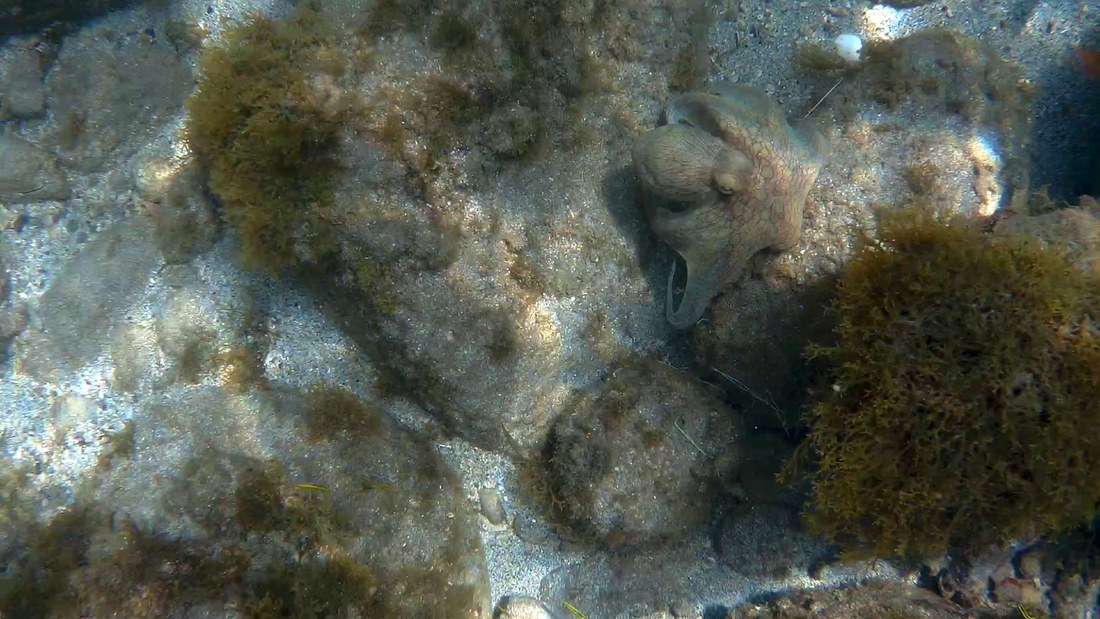
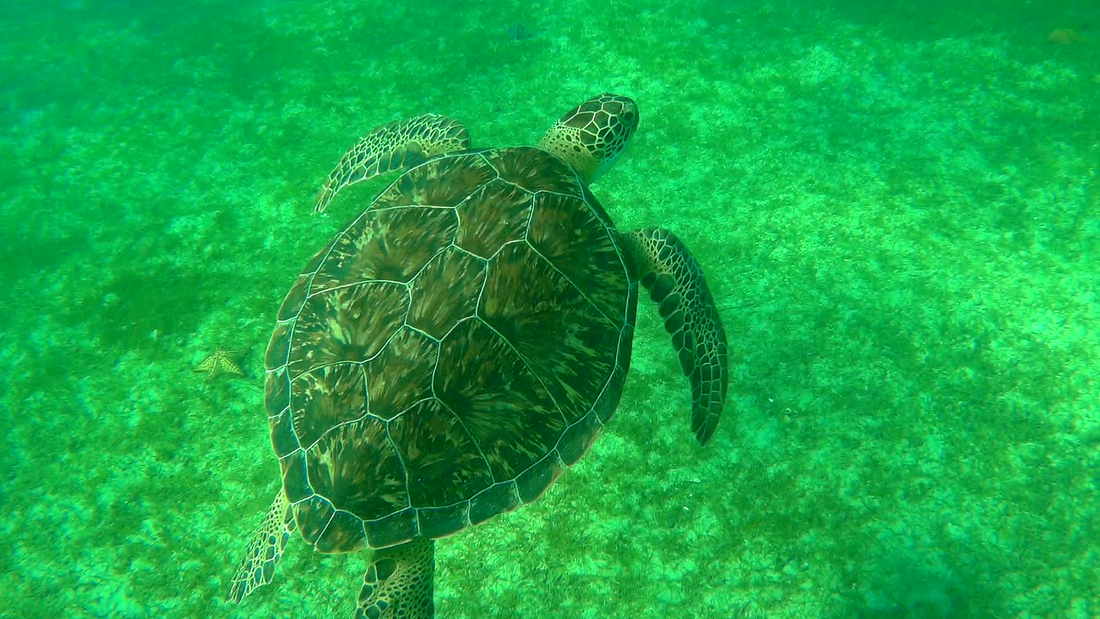
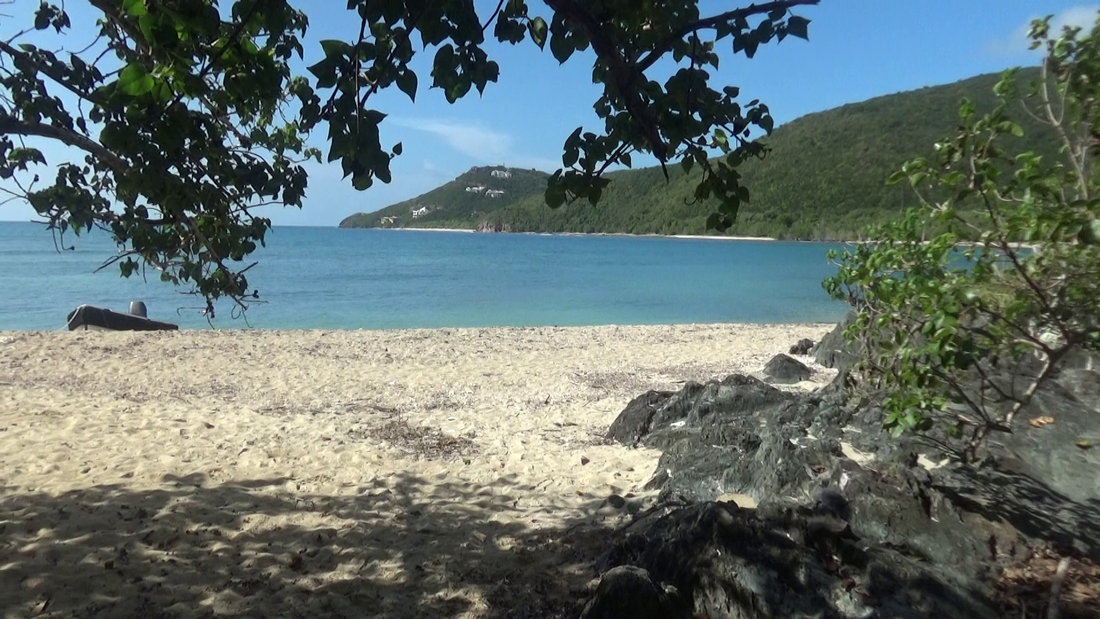
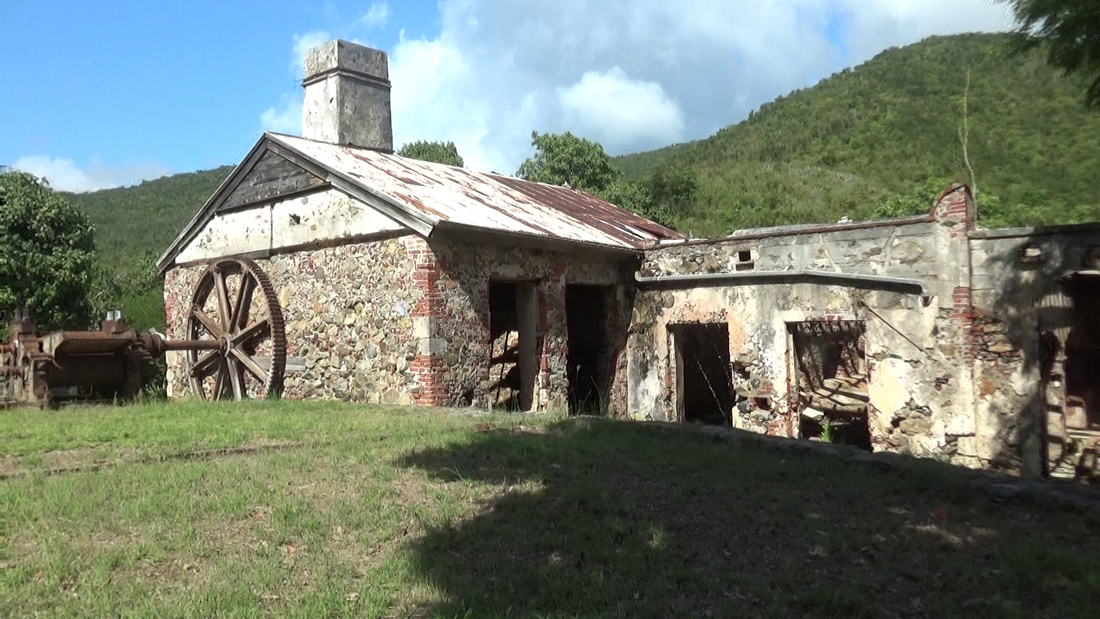
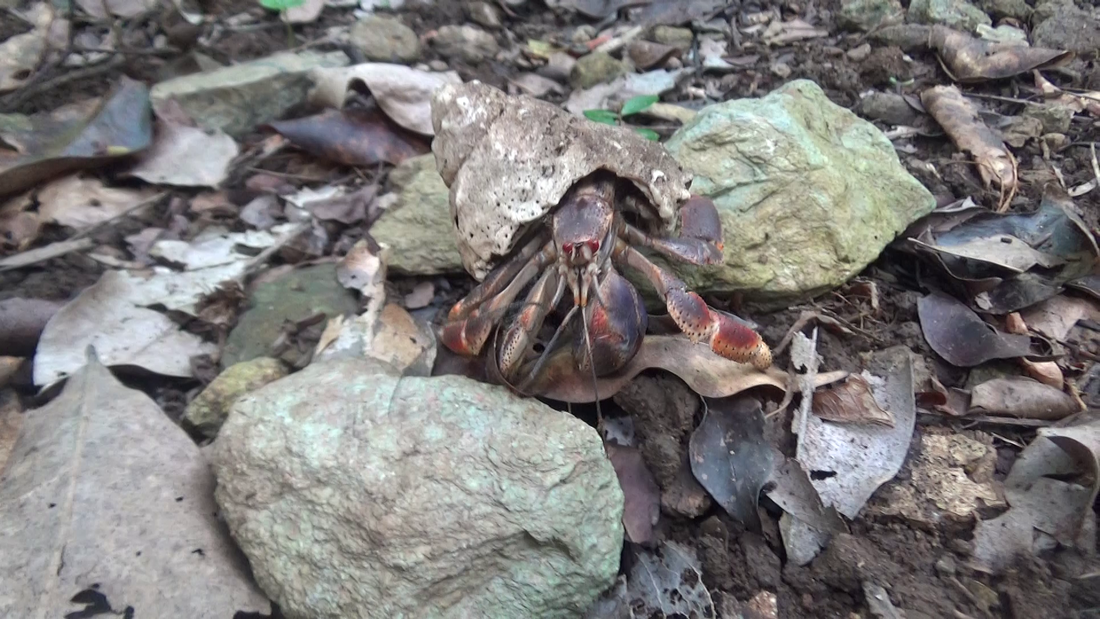
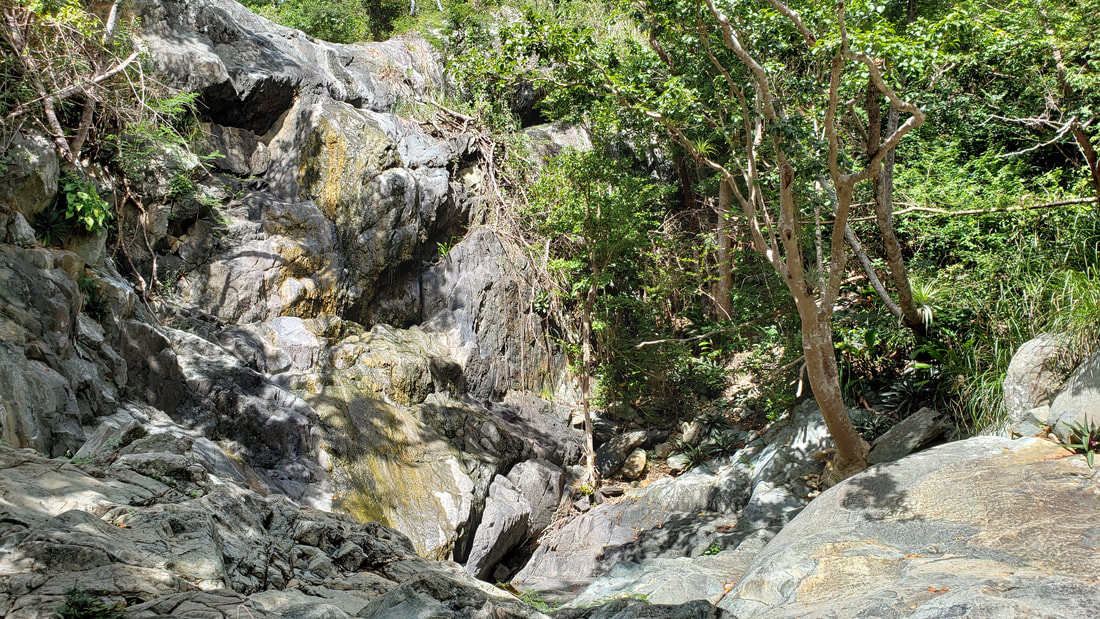
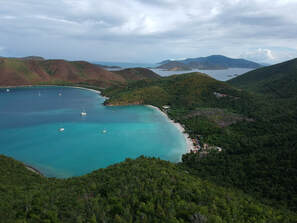
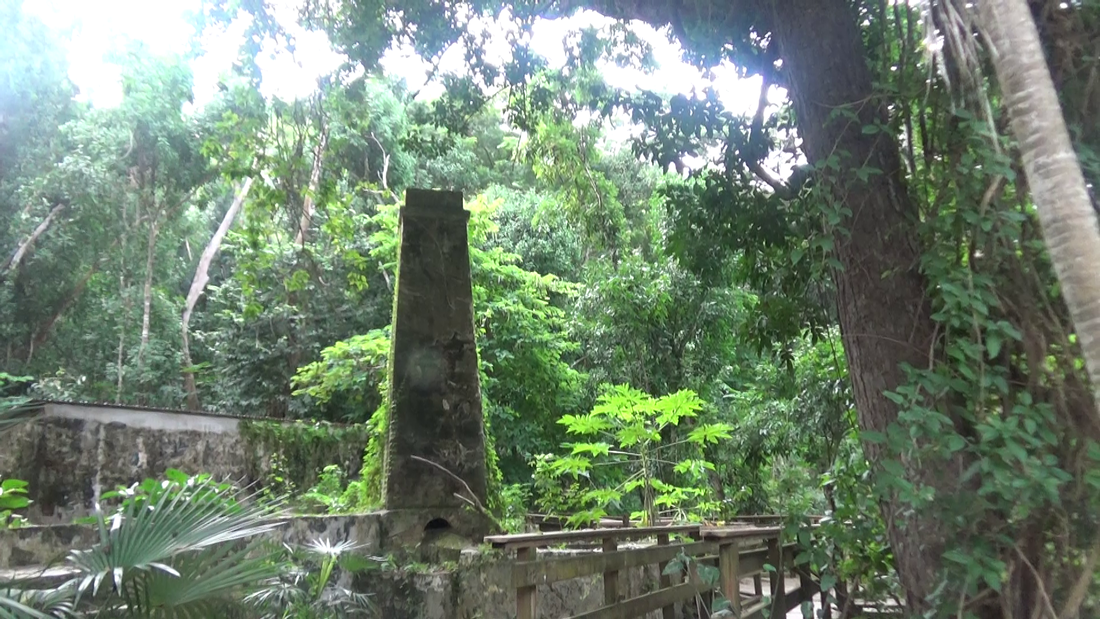
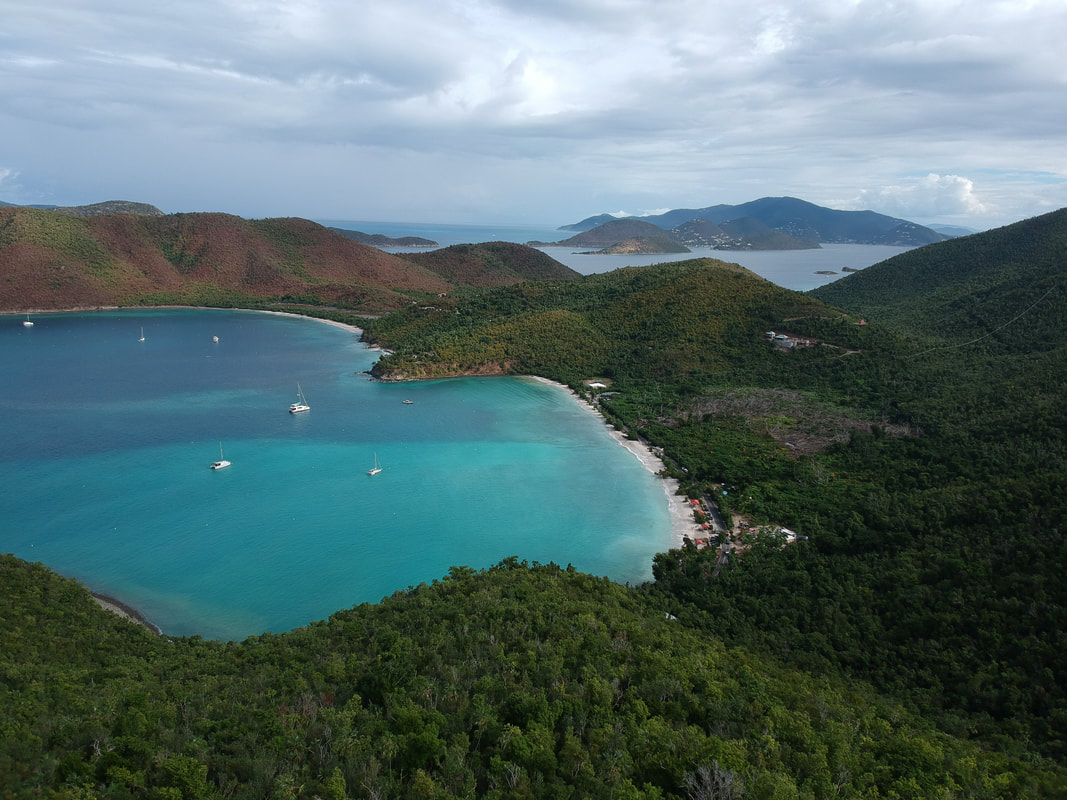
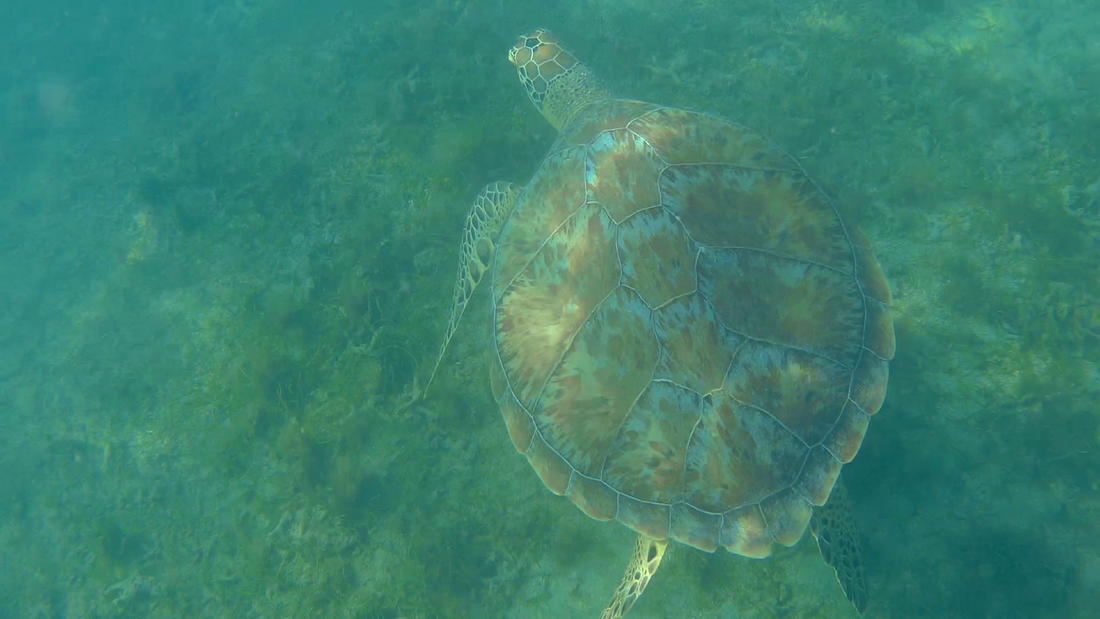
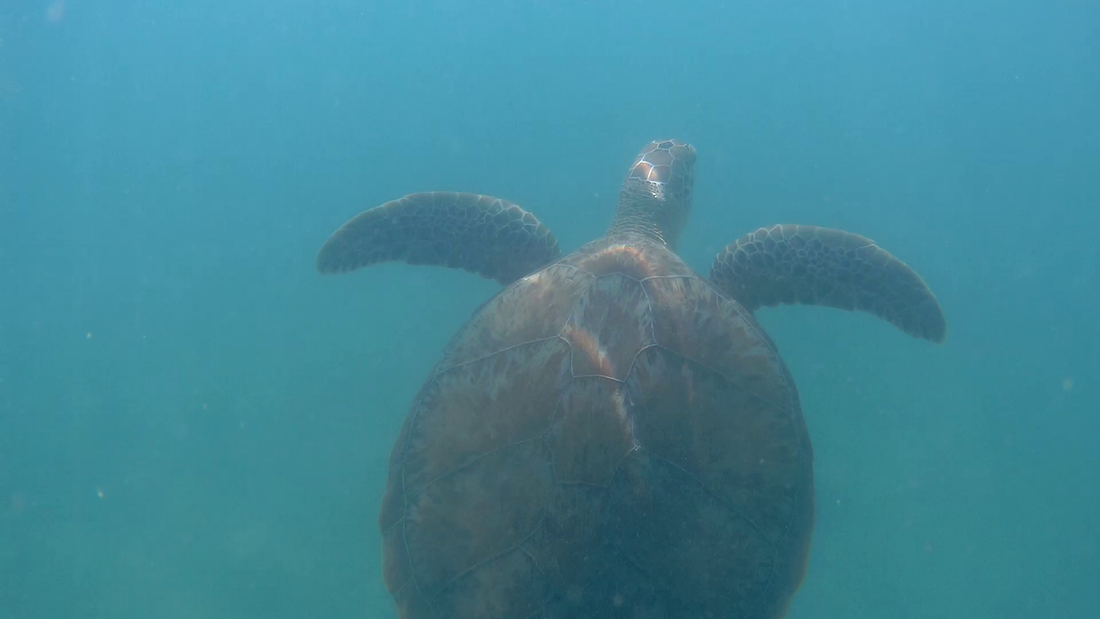
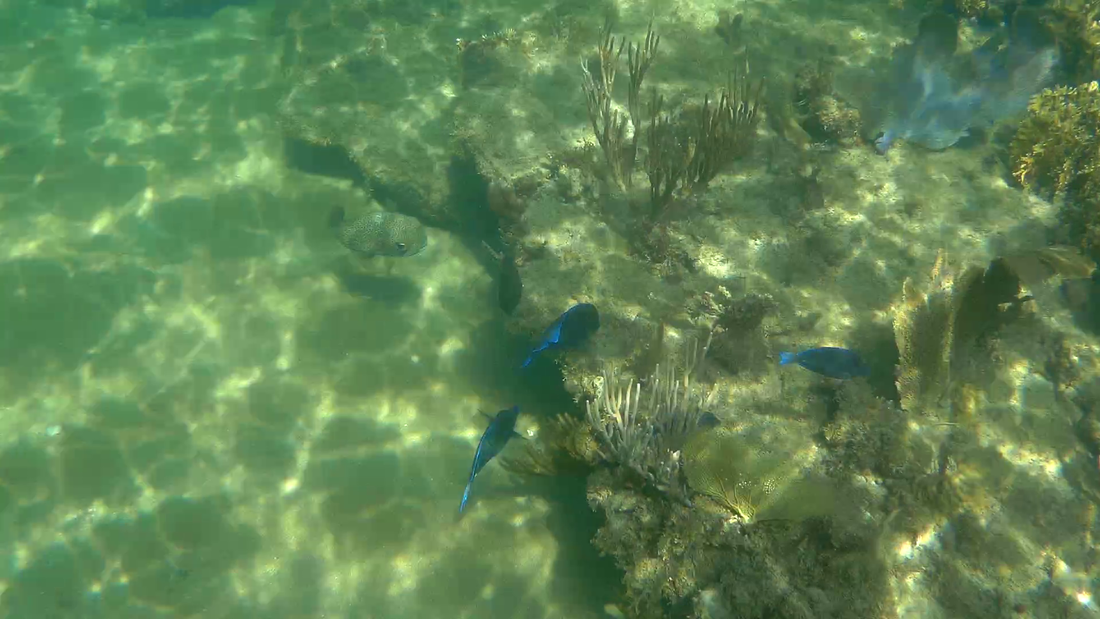
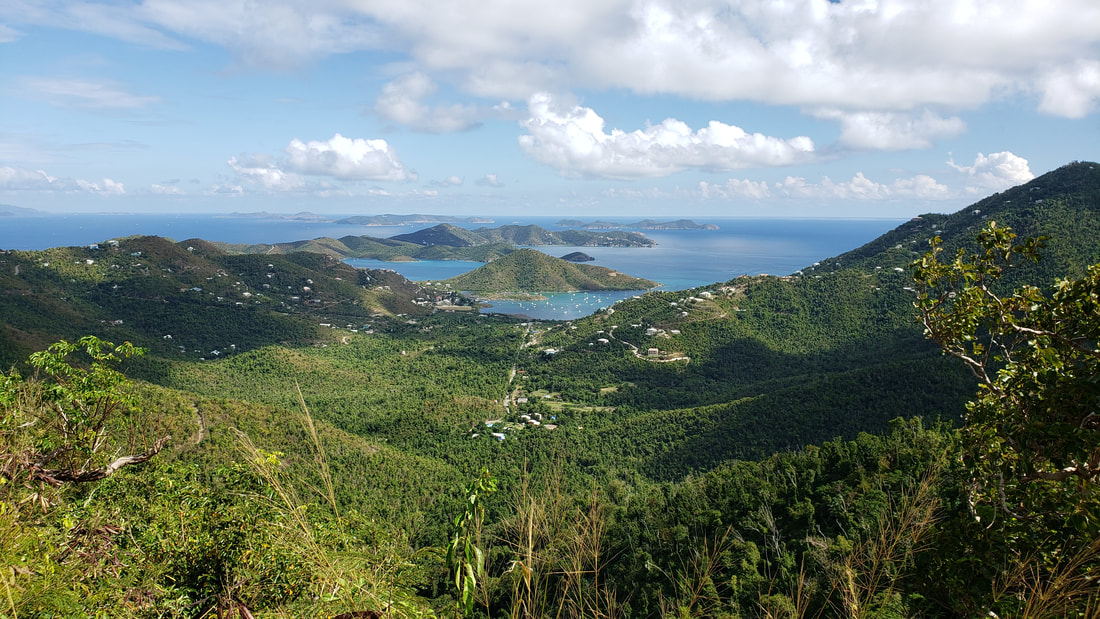
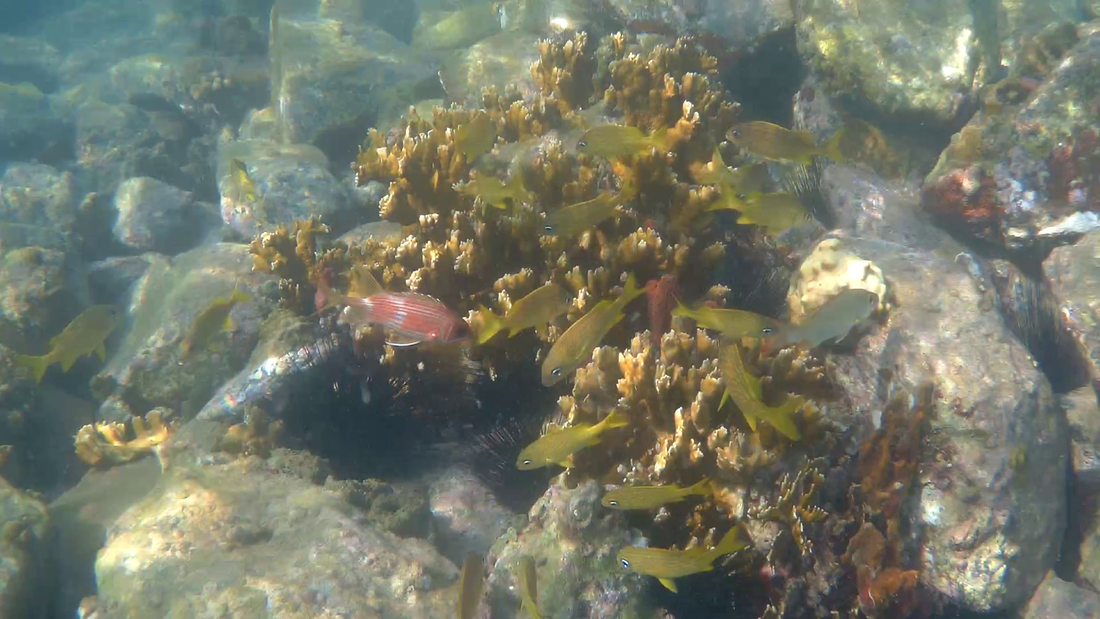
After breakfast Jessie and Stacy took us around Fort de France to see the sights and make sure we were checked into the country. We motored over to Maximarine to check in. There are computers at some marinas in Martinique that allow you to check in online. This makes checking in and out really simple and fast. When we were all checked in we explored the downtown area of Fort de France. It is a historic area and still retains much of its Caribbean charm. The next day we rounded Cape Salomon to set the anchor at Grande Anse d’ Arlet. The winds were coming from the east rolling down the high hills of Martinique. The 15 knots of wind made for a nice beam reach as we headed South out of Fort de France Bay. Grande Anse is a picturesque Caribbean anchorage. The water is clear. There are beautiful homes. People are enjoying the beach and the wildlife. Since it was a calm spot I took the opportunity to go up the mast. During our voyage to Martinique one of our lazy jack lines had parted. Lisa raised me up the mast with the main halyard so I could reconnect it. On my way back down I spotted a lone sea turtle coming up for a breath just beyond the transom of Unwritten Timeline. As soon as I was on the deck Lisa threw on her snorkel and jumped in the water to see what else she could find. The bay was teeming with life. She swam with the sea turtle for several minutes. While she was in the water she was greeted with lots of large starfish, spotted eels, baitfish, sea urchin, and even an octopus. Grand Anse was everything you would expect a tropical paradise to be. We ended up staying and exploring the nearby bays for a few days before we set off North for a rum tour. We are pirates after all. Arrrgghhhhh. Fort de France at night. We pulled up the anchor from Rendevouz Bay and had to make one more stop at St. John before we could head South. Our watermaker membrane had arrived so we arranged for it to be delivered to the fuel dock at American Yacht Harbor. The winds were already picking up and a steady rain had begun to fall. Lisa maneuvered Unwritten Timeline down the channel and pivoted in front of the fuel dock. She skillfully glided up to the fuel dock despite the wind and limited visibility. As soon as the boat was secured she jumped off and made her way to the vet. We were waiting for some last minute paperwork to get Bastet into the next few countries. While Lisa was getting paperwork David filled up the fuel and water. The watermaker membrane was delivered and installed. Lisa hopped back aboard paperwork in hand and the engines roared to life again. The lines were loosed, Lisa powered up and we were on our way to our next country. As we made the right turn South between St. Thomas and St. John we raised the main sail. I had noticed dark clouds to the East but didn’t give them much thought. The anemometer was showing 15 knots and 20-25 knot winds were forecast for the day. Once the main was up and trimmed we started to unfurl the genoa. This is about the time we started getting out of the lee of St. John Island. This was also about the time the dark clouds approached the pass we were in. As the genoa started to come out the winds picked up to 20, then 25, then 30 knots. The winds caught the genoa bringing it completely out in the full force of the wind. Lisa attempted to keep Unwritten Timeline pointing into the wind but as the winds shifted due to the squall line and the islands it became extremely difficult to keep the genoa from catching at least some of the building winds. I decided to let the sheets run free. This brought the genoa flogging violently and the sheets to trail off. Now that there was no stress on the rig from the winds we started furling in the genoa. The winds kept more than enough tension on the sail to wrap it nicely around the forestay. When the sail was about 75% furled I secured the sheets and tidied up the foredeck. The sail was ripped along the foot. Not the most auspicious start to a voyage, but worse things have happened at sea. The rest of the day went about the same way. The seas built to around 5-6’ and very confused due to the squalls coming through the Caribbean every few hours. It made progress slower than planned. We had good winds to sail, but we also had to climb waves constantly. During the night we had over 40 knot winds sustained for an hour or so. The first 48 hours we averaged around 25 to 30 knots of wind. As we approached Martinique the winds slowly subsided to 15 knots and made a nice ending to the trip. As we pulled into the channel leading to Fort de France Jessie from S/V Smitty hailed us on VHF CH16. He had been tracking us on AIS and saw us getting close. We arrived around 2300 in the dark. We made our way to the busy anchorage in front of the downtown area. Jessie was kind enough to stay up and guide us in on the radio. We pulled up to within 15’ of this vessel in the dark to drop our anchor. It was a long trip and we were ready to catch up on some sleep. Check back next week when we explore Martinique. Rendezvous Bay There wasn’t much to do in Haulover Bay. There is a small beach buttressed by a rocky shoreline on either side. The lack of amenities means it is great for a couple things, peace and quiet. We had a relaxing night lazily drifting with the swell and listening to the waves roll onto the small beach and up the rocky walls. The sun rose early over St. John. Haulover bay was a dark starlit lonely anchorage. Slowly the morning sun started to rise in the East. Steadily and effortlessly it climbed above the tall green hills surrounding the bay. Just as the first rays of the Caribbean Sun started to evaporate away the morning dew the crew of Unwritten Timeline was up and preparing the boat for a short hop to Genti Bay on the South side of the island. With such a short trip planned for the day the sails stayed stowed and the two diesel engines took Unwritten Timeline steadily around the Eastern shores of St. John. We passed beautiful homes situated on the cliffs of St. John exquisitely positioned to make the most of the sunrise each day. We motored into Genti Bay and found two mooring balls the park service has placed for day use. Lisa motored up to one as Dave deftly tied the mooring lines. Once Unwritten Timeline was secured the engines were shut down and the tender was lowered. We drove the tender to an idyllic stretch of Caribbean sand just at the foot of a trail. The trail led to the Reef Bay Sugar Factory. The first sugar plantation on this land was started in 1725. After Reef Bay Estate was formed a new sugar factory was used for processing sugarcane into sugar and Rum. The sugar factory continued to operate until 1908. In the 1960s the sugar factory ruins were restored by Virgin Island National Park and the property was added to the U.S. National Register of Historic Places in 1981. Today the sugar mill is no longer occupied by workers. Now an amazingly large population of hermit crabs run the sugar mill grounds. There are too many to count. The ground seems alive with moving shells and the red and brown legs of hermit crabs moving every which way possible. The hermit crabs have overtaken the old sugar mill but there are many more walking underfoot along the trail leading to the Petroglyphs of Reef Bay. Lisa and I made our way through the tropical canopy along the Reef Bay Trail. The Petroglyphs on St. John are remnants of the Taino culture that would have greeted Columbus when he arrived. These were the earliest known inhabitants of St. John. Their artwork is still etched in the bedrock of the island to this day. We were able to see the petroglyps and check out the magnificent waterfall our friends aboard Smitty told us about. Well, there was water…and it was falling. Even though the waterfall wasn’t exactly awe inspiring it still was a great way to spend a day on St. John. We made our way back down the trail to our tender. We had to leave the bay before sunset. The park service does not permit overnight stays on their mooring balls in Genti Bay. We moved over to Rendevouz Bay for the night to enjoy a perfect sunset before we set sail for Martinique the next day. Next week we have a rousing sail South to Martinique and meet up with our good friends aboard S/V Smitty. Maho Bay Do you want to take the long way or the short way? That was the question Lisa had to answer. But, let’s back up a bit. While we were moored in Maho Bay we decided to go on a “short” hike to some of the local ruins on St. John Island. We took the tender to shore, changed into our hiking shoes, and started up the hill to the Cinnamon plantation and America Hill House. The walk to Cinnamon plantation is an easy road walk up and down a hill about a mile from the waters of Maho Bay. The trail itself isn’t much to speak of. The Virgin Islands National Park Service maintains the plantation. They maintain historical markers and information signs throughout the ruins. The plantation straddles 300 acres along the north coast of St. John Island. The first records of the plantation date back to 1739 when Adriana and Jasper Jansen purchased the land. As far back as 1805 the Cinnamon Bay plantation was growing sugarcane. Today the limestone foundations of buildings and chimneys are all that is left of the once sprawling estate. The America Hill House is accessed by a branch of the Cinnamon Bay trail. The first half of the America Hill spur is the most difficult with a very steep and rocky incline. Once you summit the rocky terrain the trail levels off a little bit. The five switchback turns make the rest of the elevation a little easier to bear. At the top you are greeted by tropical flowers, stone ruins, and stunning views of the Caribbean. America Hill House has a once beautiful coral lime plaster façade in a neoclassical design. The area is on the National Register of Historic Places. From America Hill House you can see Maho and Francis Bays. You can even see all the way to Tortola. When you reach the top you fully understand the planning and work that went into creating a once magnificent building in a beautiful place. This was the end of our planned hike. It was almost 10 am and we were sitting on the limestone wall enjoying some trail mix. That’s when I asked Lisa if she wanted to take the short route back the way we came or continue on the rest of the Cinnamon Bay trail around to Maho Bay. She chose the long way. I think she even shook her fists, smiled, and said “the long way, the long way”. After our snack and some flights with the drone we took off to finish the Cinnamon Bay trail. The trail went halfway back down the hill before turning towards highway 10. It was another up and down trail that was well maintained. We traversed rocks, mud, and small streams along the way. There were some amazing views to be had. After we made it to Highway 10 it was another 2 miles of walking along the road before we made it back to Maho Bay. It wasn’t very difficult but the hills never seemed to end. We enjoyed a tasty hamburger and a few drinks from the food trucks in Maho bay before taking the tender back to Unwritten Timeline. It was a full day of walking and exploring. We made it almost 6 miles up and down 1000’ in elevation. Check back next week when we continue on around the island of St. John. Maho Bay The distance from Redhook to Maho bay is a short 6 Nautical Miles, little wind made the decision to motor the whole way an easy one. The trip was about an hour from the time we departed the dock until we were attached to the mooring ball. We pulled into the mooring field of Maho Bay to discover a coconut palm-fringed white sand beach. There are many mooring balls that are maintained by the National Park Service. A floating pay station is located in the middle of the bay. You can drop your envelope with payment in the box when you arrive. Anchoring is allowed out in the deeper parts of the bay for larger vessels. The white sand beach extends into the clear water for 10 meters or so before dropping off into deeper water. Sea grass populates much of the bay. This makes for a perfect ecosystem to see sea turtles, rays, and lots of fish. Nearly the entire bay is within snorkeling depth making it a perfect stop to see aquatic wildlife even if you don’t have scuba gear aboard. Mornings in Maho bay begin with a spectacular view of the sunlight breaking over tall lush hills. The evening sunsets are just as magnificent. The sun sets over the Western hillside or over the island of St. Thomas depending on where you are moored in the bay. The first day in Maho bay Lisa and I jumped in to check out some of the underwater sights. We took a mooring ball on the West side of the bay making it an easy swim to the reefs along the Western wall. We saw lots of Angelfish, Damselfish, and Atlantic Blue Tangs. We didn’t get to see any rays during our stay but we did manage to find a couple of sea turtles lazily eating the sea grass. Maho bay is a protected anchorage so the sea life has little to no fear of humans. You can see this in their reactions. The sea turtles were peacefully eating away as we watched them. They didn’t have a care in the world about us being there. The beach has a couple of small outdoor bars where you can get a cold drink and a bite to eat. We were able to take the tender or simply swim over to the beach when we wanted a break from the boat. This is what cruising the USVI is all about. We ended up spending a few days in the tropical bay. We even ventured out on a 10-mile trek around St. John. But that is a story for next time. We enjoyed another day in the tropical paradise of Vieques Island. The colorful fish and coral beneath the boat and the sandy beaches under the swaying palm trees made this a perfect stop. I guess a little too perfect.
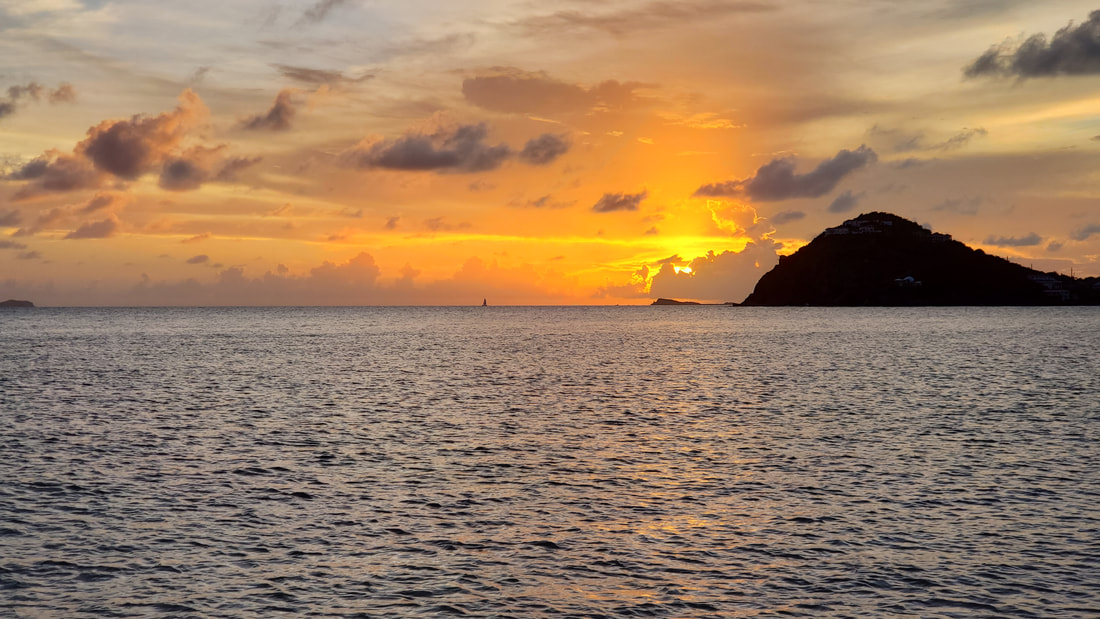
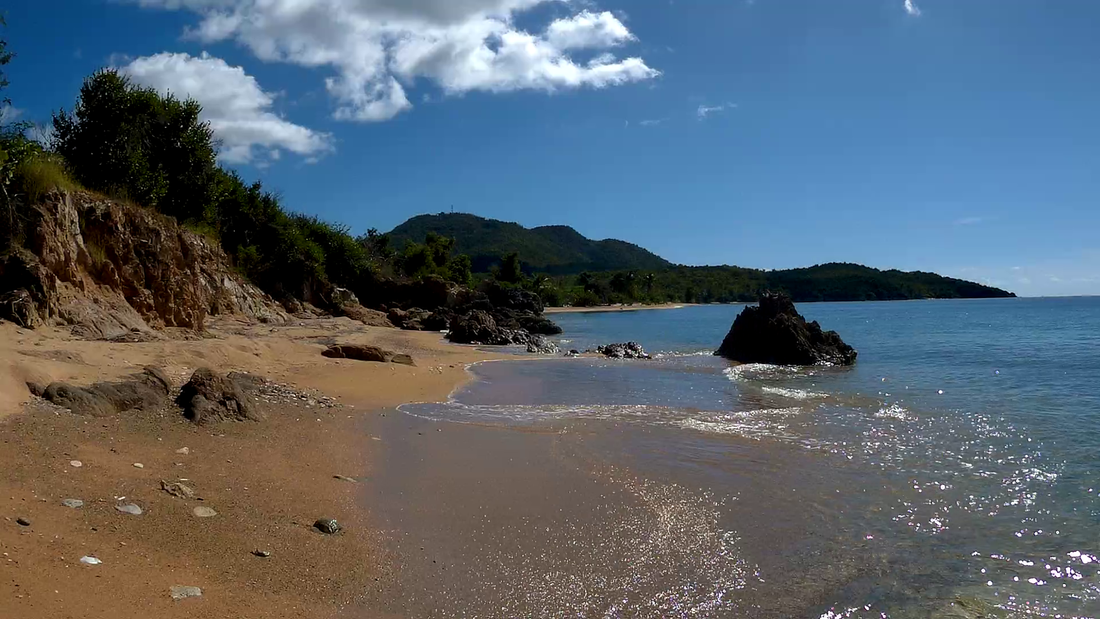
Lisa had been drinking more and more water the past few days and I was noticing a slight taste in some of our drinks. We usually use the crystal light flavor packets so at first, we chalked it up to odd-tasting flavors. Then in the afternoon as we were sitting in the saloon relaxing I looked at her water bottle and the culprit became clear. The halocline between the fresh and saltwater was readily apparent. I hadn’t been testing the water maker water the way I should have. This resulted in bad water going in our freshwater tanks. We filled our tanks with fresh water when we left Marina Pescaderia. It took several days for the tanks to start taking on the saltwater before we noticed it. We always carry an extra 10 gallons of freshwater in two 5 gallon jerry cans in case something happens to our primary water source. We also carry a case or two of bottled water. Since we were prepared with our back up water supplies this wasn’t an emergency but something we wanted to get fixed quickly. We can’t stay off-grid forever on 15 gallons of fresh water. Our original plan was to visit Culebra on our way East. With our saltwater issue, I called around to find a water maker repair shop in the area. Reefco Services was located on the east side of St. Thomas. Since it was on our way we chose them to service the water maker and order a new membrane. We started planning our trip to Saint Thomas, USVI. We would have to save Culebra for next season. When we arrived in STT we reserved a slip at American Yacht Harbor. This allowed the technician easy access to the belly of Unwritten Timeline. I was pretty sure the membrane was bad but I wanted a second opinion before we set off through the Caribbean. Freshwater isn't always easy to come by in secluded anchorages. The technician determined the membrane was in fact faulty. Another membrane would have to be ordered. The expected delivery time to STT would be 5-7 days. We took advantage being at a marina with unlimited water and electricity and gave UT a good wash down, scrubbed the water tanks and did several loads of laundry. After a few days of boat projects and cleaning we were ready to explore the islands. We decided to leave the marina and go explore the island of St. John while we waited for the water maker parts. It was a short 6 NM to Maho bay from the marina so we topped off our water tanks, jerry jugs, and stocked up our bottled water and headed out of Redhook Bay. Green Beach We planned out another easy day passage of 49 nautical miles. Lisa and I woke up without an alarm and enjoyed a light breakfast and tea. We watched the sunrise before we started preparing Unwritten Timeline for the days' passage. The weather system that had allowed us to sail to Cayo Puerca had mostly passed and the tradewinds were blowing from the East again. It would be a tough day to sail. While normally a straight line is the fastest way to get from point to point, that’s not always the case with a sailboat. Especially if you want to actually sail your sailboat. The most direct path was on a 080 heading taking us nearly directly into the trade winds. We modified our route so we could motor almost directly east for the first part of the trip. After a few hours we would be miles offshore in the Caribbean Sea. We motored until our direct course to our destination was about 45 degrees from the wind. Once this course was reached we turned to our new anchorage and hoisted the sails. The winds filled our genoa and mainsail nicely as we trimmed to a close haul. This starboard tack would take us directly into the anchorage. Sailing makes you a more patient person. There is no fighting the wind if you want to sail. It is what it is. You have to learn to wait for the right weather conditions. You can only put yourself in the best position to take advantage of the wind provided. Our actual course may have added more than a few miles to the trip but it allowed us to actually sail. We could have chosen to sail almost the entire way tacking back and forth against the easterly trades but that would have added many, many more miles. Our day trip would have turned into a two-day trip. A half motor, half sail seemed like a good compromise trying to go East in the Caribbean. When we finally coasted into the anchorage at Green Beach we were met with a stunning rocky and sandy beach. The landscape was glowing in perfect hues of yellow and orange in the setting sun. The rattle of the chain and anchor sliding over the bow roller was soon eclipsed by the sounds of crashing waves on the beach. We were safe and secure in a new anchorage with a perfect view of the setting sun. Check back next week when Lisa can’t quench her thirst no matter how much water she drinks. |
If you like what we're doing and want to contribute to the upkeep and future upgrades you can donate here.
We can't thank you enough for your donation. Categories
All
|


RSS Feed